From around 6 months, your baby can share most of a plain Christmas dinner: turkey, potatoes, carrots, parsnips, sprouts and other veg, cooked soft and served without added salt. The main things to keep off their plate are salt (gravy granules, stock cubes, stuffing, ham and pigs in blankets), honey (glazes), whole nuts, the alcohol and sugar in Christmas pudding, cake and trifle, and anything shaped to choke on.
Below you’ll find a food-by-food table, what a Christmas plate looks like at each age, how to cook one roast for everyone, and quick answers to the “can my baby have…?” questions that come up every December.
Ages: 6 months+ · Toddler notes for 1–3 years
Five things to keep off your baby’s plate
- Salt: don’t add it, and skip stock cubes and gravy granules. Under-1s should have less than 1 g of salt a day, and 1–3-year-olds no more than 2 g (NHS).
- Honey: none before 12 months, including honey-glazed ham, parsnips and carrots (NHS; CDC).
- Whole nuts: not for children under 5. Crushed or ground nuts in food are fine from around 6 months (NHS).
- Alcohol and sugar: Christmas pudding, cake, mince pies, trifle and brandy butter are made for grown-ups.
- Choking shapes: quarter grapes and cherry tomatoes, and keep hard sweets and candy canes away (NHS; CDC).
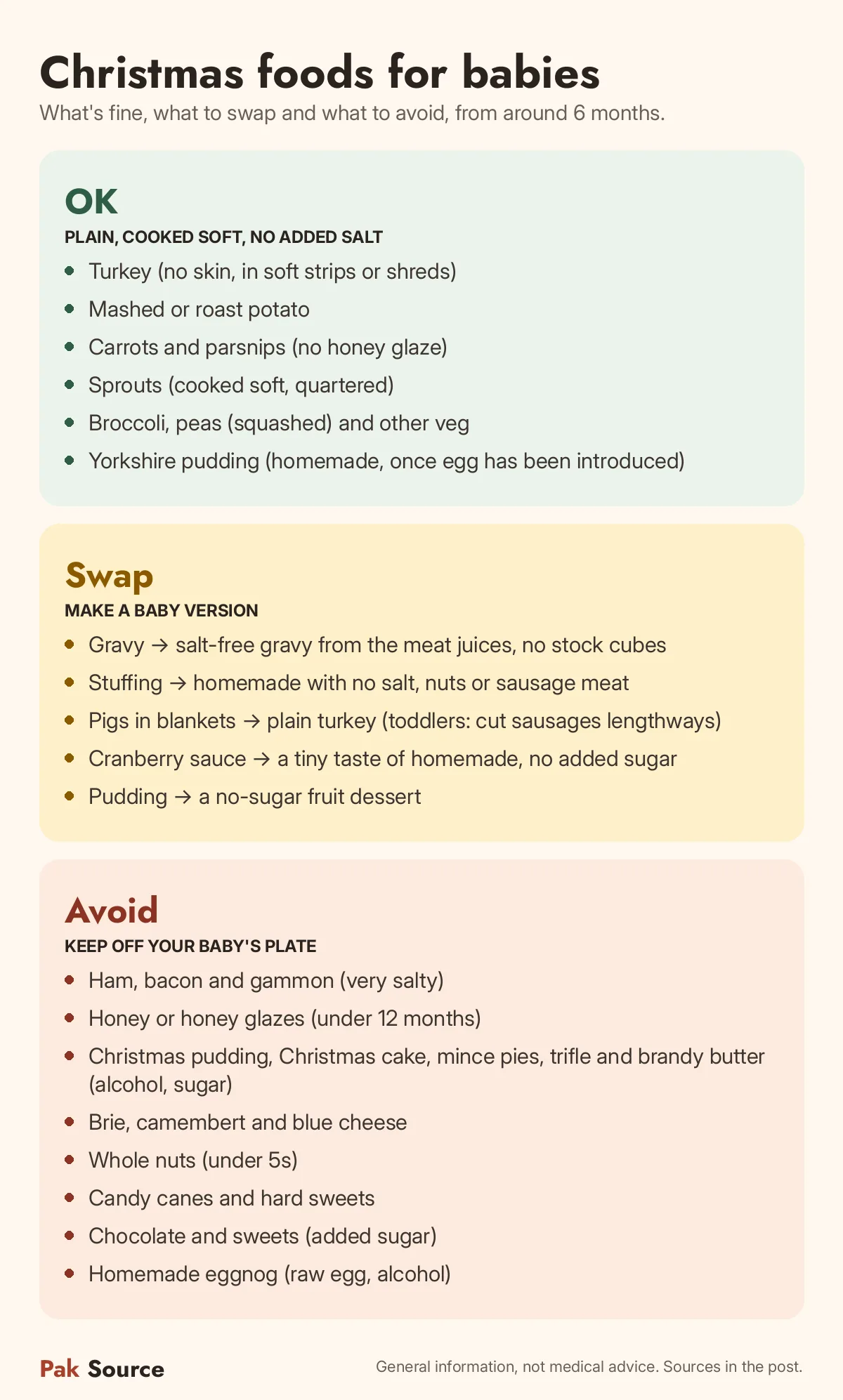
Christmas foods for babies at a glance
| Food | OK for baby? | How to serve it | Watch out for |
|---|---|---|---|
| Turkey | Yes | No skin, in soft strips or shreds; blended with gravy or milk for younger babies | Salty skin and seasoning; dry, chunky pieces |
| Roast or mashed potato | Yes | Mashed, or soft wedges roasted in unsalted oil | Salt on top; very crunchy edges for young babies |
| Carrots and parsnips | Yes | Steamed or roasted soft, in finger-sized sticks | Honey glaze (under 12 months); maple syrup |
| Sprouts | Yes | Cooked soft, quartered or mashed | Whole round sprouts |
| Broccoli, peas and other veg | Yes | Soft florets; peas squashed | Butter with added salt |
| Yorkshire pudding | Yes, homemade | Small soft pieces, once egg has been introduced | Salt in the batter; contains egg, milk and wheat |
| Gravy | Swap | Salt-free gravy from the meat juices, no stock cubes | Granules and stock cubes are high in salt |
| Stuffing | Swap | Homemade with no salt, nuts or sausage meat | Salt, sausage meat, whole or chopped nuts (including chestnuts) |
| Pigs in blankets and sausages | Swap | Plain turkey instead. For toddlers, an occasional piece cut lengthways, then small | Very salty; a classic choking shape |
| Ham, bacon and gammon | Avoid | Plain turkey or chicken instead | Very salty; often honey-glazed |
| Cranberry sauce | Swap | A tiny taste of homemade, no added sugar | Shop-bought sauce is mostly sugar |
| Christmas pudding | Avoid | A no-sugar fruit dessert instead | Alcohol, sugar, dried fruit, sometimes nuts |
| Christmas cake and mince pies | Avoid | A no-sugar fruit dessert instead | Alcohol, sugar, marzipan (almonds) |
| Trifle and brandy butter | Avoid | Plain yogurt with soft fruit instead | Uncooked alcohol, sugar |
| Cheese board | Some | Small amounts of pasteurised hard cheese like cheddar, grated or thinly sliced | Brie, camembert and blue cheese; salty crackers; whole grapes |
| Chocolate and sweets | Avoid | Not needed at this age | Added sugar; foil wrappers |
| Candy canes and hard sweets | Avoid | Keep them out of reach | Choking hazard |
| Nuts | Ground only | Finely ground into food, once nuts have been introduced | Whole nuts (under 5s) |
| Eggnog | Avoid | Warm milk (over 1 year) or water | Homemade versions may contain raw egg and alcohol; sugar |
Your baby’s Christmas plate by age
Around 6–8 months: smooth or mashed
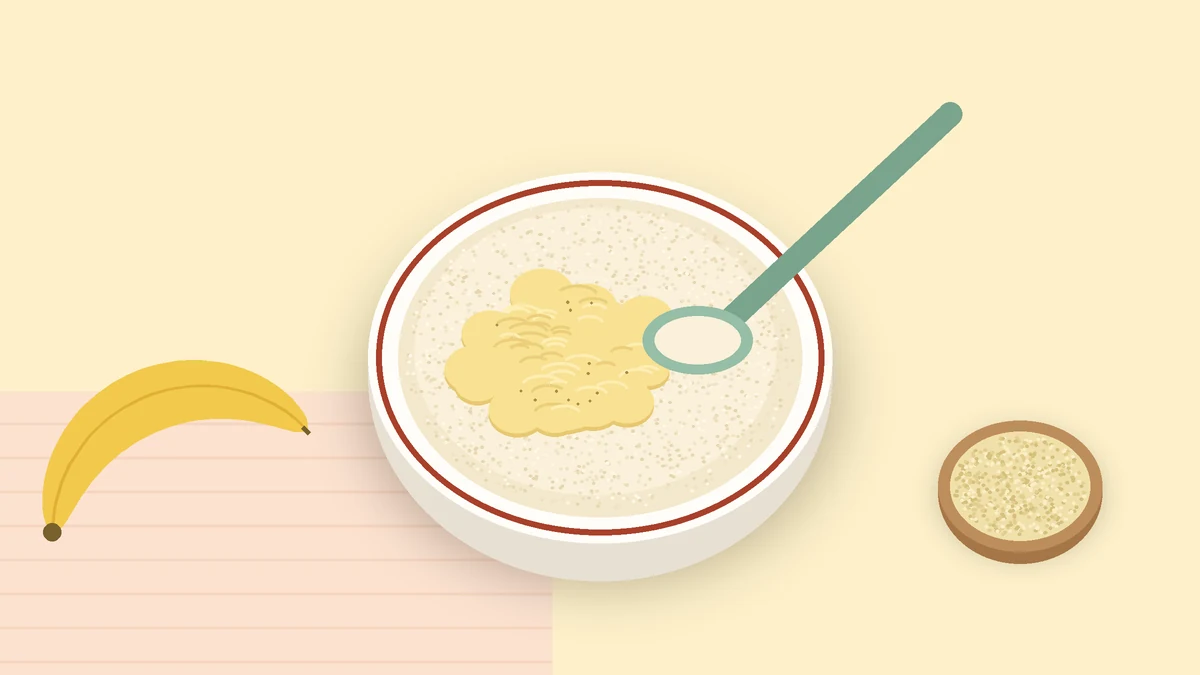
Blend a little turkey with some of the cooking water, salt-free gravy or your baby’s usual milk until smooth. Serve it alongside mashed potato, carrot and parsnip. If your baby has been doing finger foods, soft steamed carrot and parsnip sticks about the length of your finger are easy to hold (NHS). Keep portions small. It’s a taste of the day, not a big meal.
9–12 months: soft finger foods
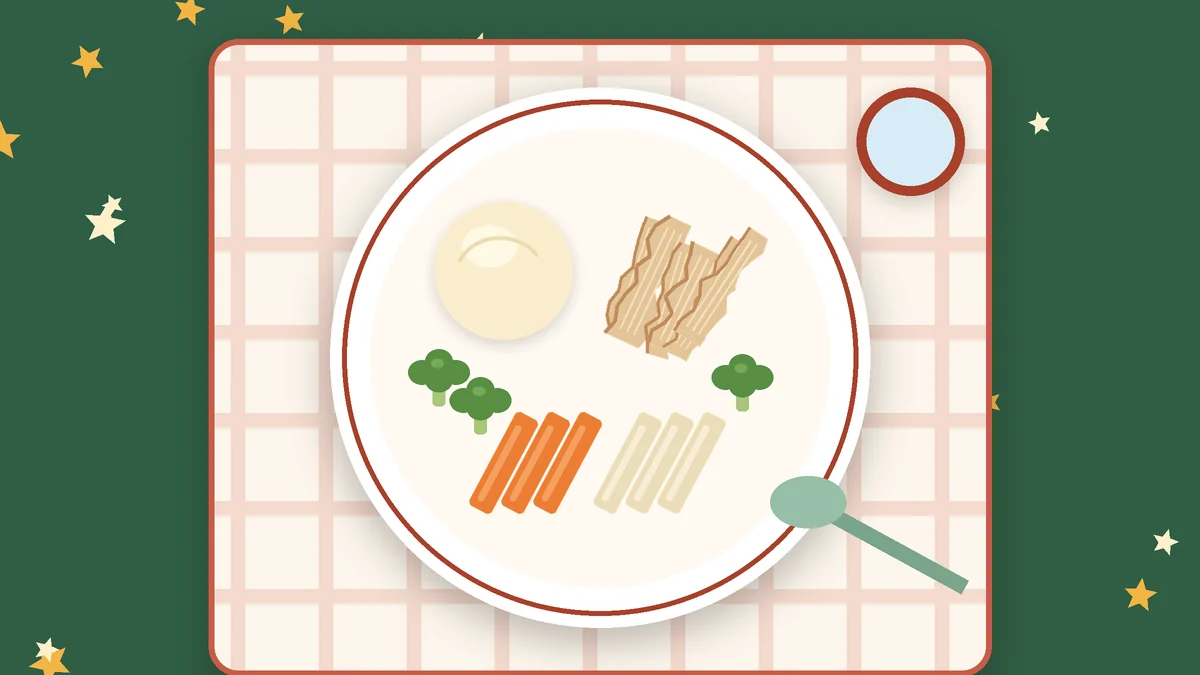
Offer shredded turkey (no skin), soft roast potato wedges, sticks of carrot and parsnip, broccoli florets, quartered sprouts and squashed peas. A small piece of homemade Yorkshire pudding is fine once egg is familiar. Cut small, round foods like grapes and cherry tomatoes into quarters (NHS).
Toddlers, 1–3 years: the family plate with small swaps
Toddlers can eat what everyone else is having, with a lighter hand on the salt and sugar. Serve a small spoonful of gravy rather than a pool of it, and skip the pigs in blankets or offer one piece, cut lengthways and then into small pieces. Choose a fruit dessert over pudding. For festive party food, see our healthy Christmas snacks for toddlers. For more ideas at this age, see our meal ideas for 2-year-olds and what to feed a 1-year-old.
How to make one roast work for the whole family
- Season at the table, not in the pan. Roast the turkey and veg without salt and let adults add their own. If you salt the potatoes, roast a small baby tray separately.
- Take the baby’s portion out first. Spoon off their veg before the butter, honey or maple glaze goes on.
- Make a baby gravy. Skim the fat from the roasting juices, add a little water or the veg cooking water, and thicken with a teaspoon of flour or cornflour. Then make the family gravy as usual. NHS advice is to avoid stock cubes and gravy for babies because they’re often high in salt (NHS).
- Cook the stuffing separately in a dish, not inside the bird, and keep a few balls plain: breadcrumbs, onion, herbs and egg, no salt or sausage meat.
- Turkey must be cooked through: 74°C (165°F) in the thickest part, with clear juices (USDA).
- Plan a baby pudding: baked apple, stewed pear, plain yogurt with soft fruit, or our no-sugar carrot halwa.
Can babies eat…?
Christmas ham
It’s best kept off a baby’s plate. Ham, gammon and bacon are cured with salt, and the NHS lists bacon and sausages among the salty foods to avoid (NHS). Honey-glazed ham is also off the menu before 12 months. Plain turkey is the better choice.
Gravy
Not the usual kind. Gravy granules and stock cubes are high in salt, so make a quick salt-free version from the meat juices (see above). Toddlers can have a little family gravy as part of their day’s salt.
Stuffing
Only a plain homemade version. Packet mixes, sausage-meat stuffing and anything with chopped chestnuts or other nuts aren’t suitable for babies.
Pigs in blankets
Not for babies. They’re sausages wrapped in bacon, so they’re very salty, and sausages are on the CDC’s choking-hazard list (CDC). For a toddler, offer one piece at most, cut lengthways into quarters and then into small pieces (AAP).
Christmas pudding
It’s best avoided for babies and young toddlers. Most Christmas puddings are made with brandy, rum or stout and are often fed with more alcohol as they mature. They’re also high in sugar, and some contain nuts. The NHS advises avoiding food with added sugar for children aged 4 and under (NHS).
Christmas cake and mince pies
These have the same problems: sugar, often alcohol, and marzipan made from almonds. Mince pies are mostly sugar and dried fruit. Save them for the grown-ups.
Trifle and brandy butter
No. These aren’t cooked after the alcohol goes in, so the sherry in a trifle and the brandy in brandy butter are all still there. Offer plain yogurt with soft fruit instead.
Cranberry sauce
Shop-bought cranberry sauce is mostly sugar, and children under 2 shouldn’t have added sugars (CDC). If you’d like your baby to try it, simmer a few fresh cranberries with grated apple and no sugar, and offer a tiny taste. Cranberries are very sharp on their own.
The cheese board
Pasteurised full-fat hard cheese like cheddar is fine from around 6 months, grated or thinly sliced (NHS). The NHS says babies and young children shouldn’t eat mould-ripened soft cheeses such as brie or camembert, ripened goats’ cheese, or soft blue-veined cheese such as roquefort. Crackers are often salty, and grapes on the board need quartering.
Chocolate coins and candy canes
Chocolate and sweets aren’t needed and add sugar, so it’s easiest to leave them out. Keep foil wrappers off the floor too. Candy canes and other hard sweets are a choking hazard for young children (CDC), so hang them high on the tree.
Eggnog
It’s not one for babies. Homemade eggnog can contain raw egg and alcohol, and shop-bought versions are high in sugar. In the US, the FDA advises using pasteurized eggs in any recipe that’s served raw, and notes that children are at greater risk of serious illness from Salmonella (FDA). In the UK, eggs with the British Lion mark are considered safe for babies even raw or lightly cooked (NHS). Still, a sweet, boozy drink isn’t something a baby needs.
When family offer a taste
At Christmas, everyone wants to give the baby a little something. A few things make it easier:
- Bring your baby’s own food if you’re eating out, so there’s always something safe on hand.
- Agree the swaps in advance with whoever is cooking: one tray of unsalted veg and a little plain gravy is a small ask.
- Offer a job instead of a treat. Let a grandparent give the baby their turkey or carrot sticks.
- Keep it simple: “they can’t have honey or whole nuts yet” is easier to say than a long explanation.
Leftovers: storing and reheating baby portions
- Cool and chill quickly: get cooked food into the fridge within one to two hours. Splitting it into smaller portions helps it cool faster (Food Standards Agency).
- Fridge: the FSA says to eat leftovers within 48 hours. For baby portions of turkey or other meat, the University of Illinois Extension advises a stricter 1 day (University of Illinois Extension). Freeze anything you won’t use by then.
- Freezer: freeze baby portions as soon as they’ve cooled, and use them within about a month for best quality (University of Illinois Extension).
- Reheat once only, until steaming hot all the way through. Then stir, let it cool and test it before feeding your baby (NHS).
- Throw away anything left in your baby’s bowl.
Allergens on Christmas Day
Christmas food is full of common allergens: nuts in stuffing, marzipan and desserts, egg and milk in Yorkshire puddings and custard, wheat in stuffing and pastry, and sesame in some crackers and dips. The NHS advises introducing foods that can cause allergies one at a time, so you can spot any reaction (NHS). In practice, that means trying anything new on an ordinary day at home in the run-up to Christmas, not on the day itself in a busy house. On Christmas Day, stick to foods your baby has already had.
If your baby has swelling of the lips or face, trouble breathing, or becomes floppy or pale after eating, call 999 in the UK or 911 in the US straight away (NHS).
Christmas dinner for baby: FAQs
Can a 6-month-old have Christmas dinner?
Yes, a small, plain version once they’ve started solids: pureed or mashed turkey and vegetables with no added salt. Stick to foods they’ve already tried.
Can babies have roast potatoes?
Yes, if they’re soft inside, cut into wedges and roasted without salt. For younger babies, mash them instead.
Can babies eat Christmas pudding?
It’s best not to. It usually contains alcohol and a lot of sugar. A baked apple or stewed fruit makes a festive alternative.
Can toddlers have a little gravy?
A little, yes. Toddlers aged 1–3 can have up to 2 g of salt a day in total (NHS), so keep it to a small spoonful, or make a salt-free gravy for everyone.
What can my baby have for Christmas pudding instead?
Try baked apple with cinnamon, stewed pear, plain yogurt with mashed berries, or a no-sugar gajar halwa. For more ideas, see our easy baby food recipes.
This article is for general information only and isn’t medical advice. Every child is different. Talk to your GP or health visitor (or pediatrician in the US) about your child’s needs, especially if your child has a food allergy, eczema, a medical condition, or trouble with feeding or growth. If your child is choking or has signs of a severe allergic reaction (swelling of the lips or face, trouble breathing, becoming floppy or pale), call 999 in the UK, 911 in the US, or your local emergency number.
Sources
- NHS. Foods to avoid giving babies and young children. Reviewed 18 Feb 2026.
- NHS. Your baby’s first solid foods. Reviewed 19 Feb 2026.
- NHS. Salt: the facts. Reviewed 17 Apr 2023.
- NHS. Food allergies in babies and young children. Reviewed 22 Oct 2024.
- NHS. Food allergy. Reviewed 20 Aug 2026.
- NHS Best Start in Life. Storing and reheating food.
- Food Standards Agency. How to chill, freeze and defrost food safely.
- CDC. Choking Hazards.
- CDC. Foods and Drinks to Avoid or Limit.
- American Academy of Pediatrics, HealthyChildren.org. Feeding & Nutrition Tips: Your 1-Year-Old.
- U.S. Food and Drug Administration. What You Need to Know About Egg Safety. Content current as of 5 Mar 2024.
- USDA Food Safety and Inspection Service. Safe Minimum Internal Temperature Chart.
- University of Illinois Extension. Feeding My Baby: Storing and Reheating.