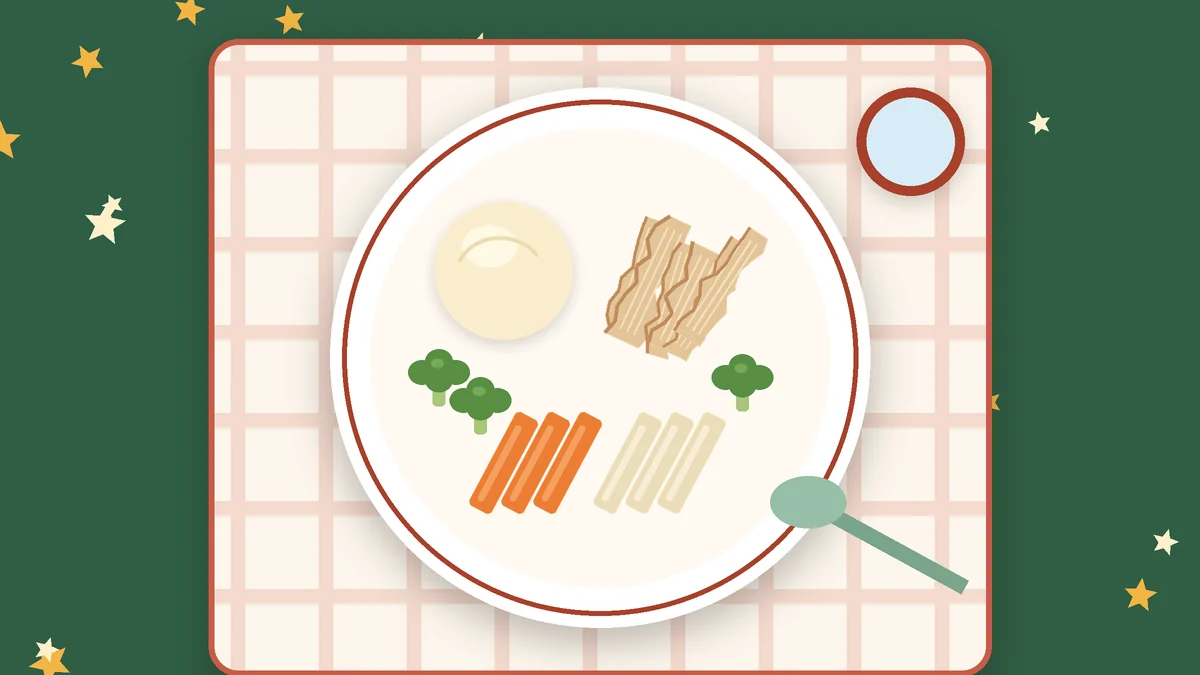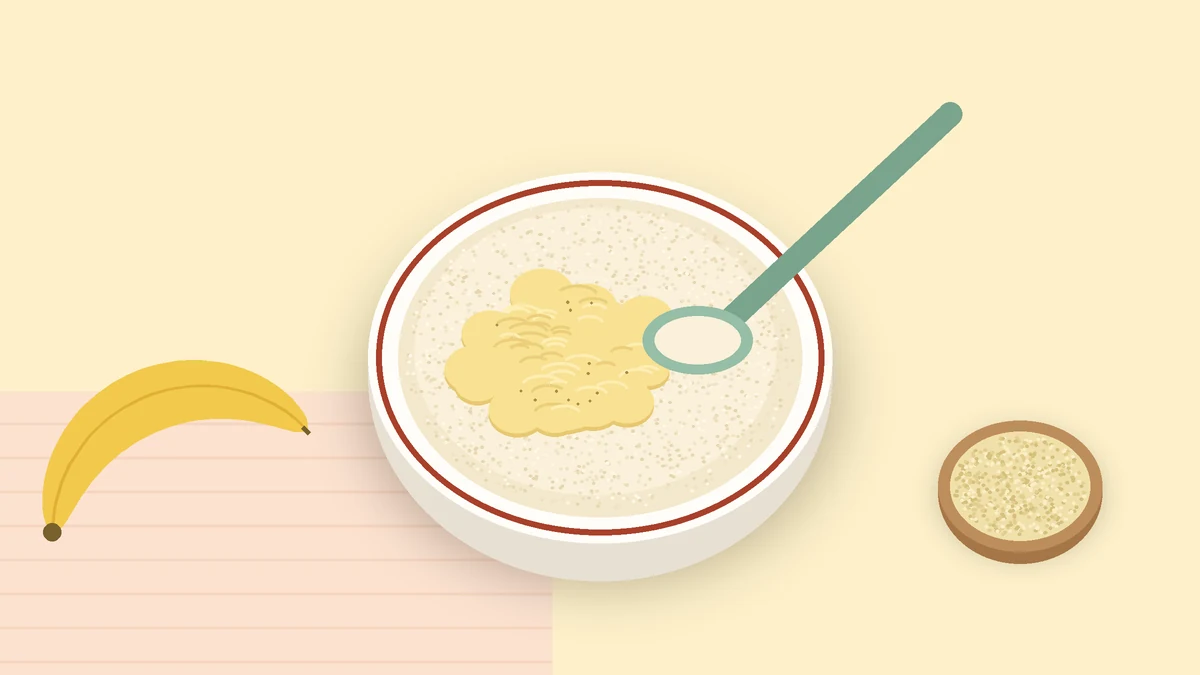
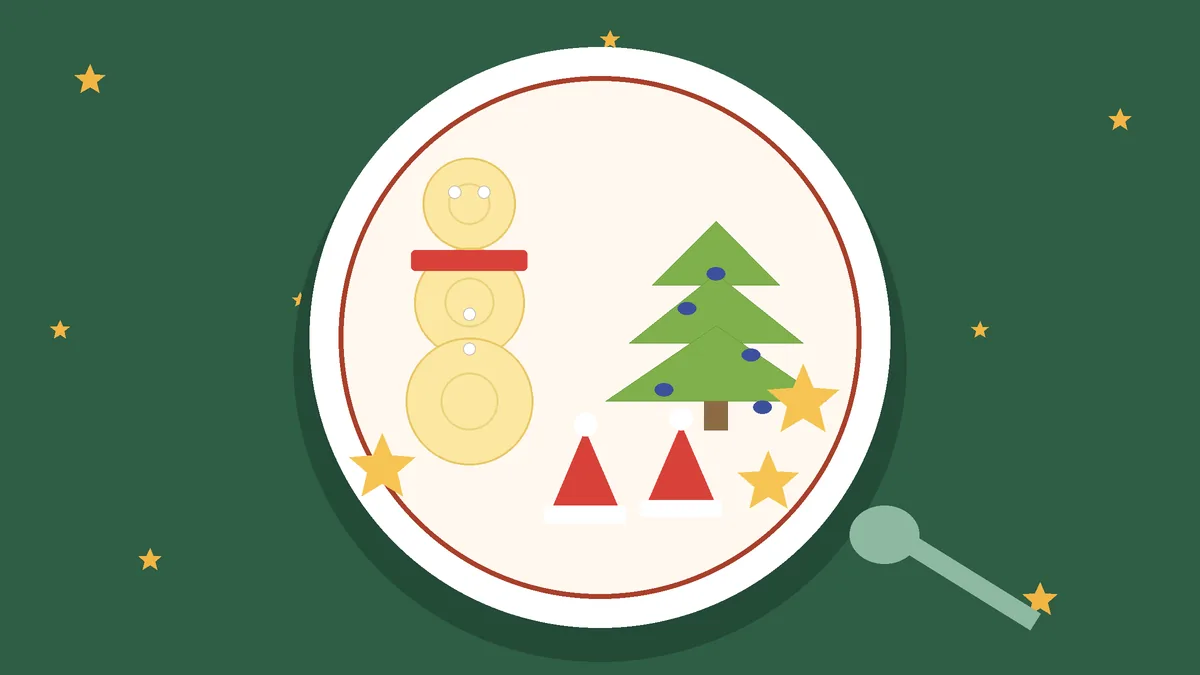
The best Christmas snacks for toddlers are everyday healthy foods in a festive shape: banana snowmen, strawberry Santa hats, kiwi trees, cheese stars and soft gingerbread-style oat cookies. Toddlers love the look, and you avoid a sugar crash before dinner. Two rules matter more than any idea on Pinterest. Cut every snack so it can’t block a small airway, and keep added sugar low, especially under age 2 (AAP; CDC).
Many popular “toddler Christmas snack” ideas use popcorn garlands, marshmallow snowmen, raisin eyes or whole cherry tomatoes. Those look cute in photos but are on the choking lists, so every idea below comes with a toddler-safe version.
Ages: 12 months to 3 years · Most ideas also suit babies who are confident with finger foods
Toddler snack safety
- Cut round foods small. Quarter grapes and cherry tomatoes lengthwise, and slice cheese thinly instead of cubing it (AAP).
- Skip the high-risk foods until about age 4: popcorn, hard or sticky candy, marshmallows, sausages and raw carrot sticks (AAP). No whole nuts until age 5 (NHS).
- Go easy on sugar. Children under 2 shouldn’t have added sugars (CDC). Let fruit do the sweetening.
- Sit down to snack. Toddlers should eat sitting up, not while walking around the party, and always with an adult watching (CDC).
15 healthy Christmas snacks for toddlers
1. Banana snowmen
Lay three banana slices flat on the plate in a line, then add a thin strip of strawberry for the scarf. For eyes and buttons, use tiny dots of plain yogurt or a smear of smooth nut butter.
Toddler-safe tip: skip the raisin eyes and the raw carrot nose you’ll see online. Dried fruit and raw carrot are both choking hazards for young children (CDC; AAP). Keep the snowmen flat on the plate, not on sticks.
2. Strawberry Santa hats
Cut strawberries in half from tip to stem, then add a little plain Greek yogurt along the cut edge for the hat’s fluffy brim and a dot on top for the bobble. For younger toddlers, cut each half again into smaller pieces after the “wow” moment.
3. Kiwi Christmas trees
Peel a ripe kiwi, slice it into thick rounds and cut each round into a triangle. Arrange them in a tree shape with a few blueberries, squashed flat, as baubles. Ripe kiwi is soft enough for most toddlers to manage.
4. Cheese stars
Press a small star cookie cutter into thin slices of mild cheddar or another pasteurized cheese. Thin slices are the safe way to serve cheese to toddlers. Chunks and cubes are on the AAP’s list of foods to avoid or modify (AAP).
5. Christmas tree quesadilla
Sprinkle grated cheese and finely chopped spinach over half a whole-wheat tortilla, fold it and cook until the cheese melts. Cut it into tall triangles, so you have a little forest of soft, warm “trees”. Let it cool before serving.
6. Mini pancake snowmen
Make small pancakes in three sizes and stack them flat on the plate as a snowman. Add a thin spread of yogurt and a few soft fruit pieces for the face. Skip the syrup. The pancakes are tasty enough on their own.
7. Reindeer toast
Spread whole-grain toast thinly with cream cheese or smooth nut butter. Add two banana slices for eyes and half a raspberry for Rudolph’s nose, then cut two thin toast strips for the antlers. Spread nut butter thinly, because thick globs are a choking risk (AAP).
8. Broccoli wreath with hummus
Arrange steamed broccoli florets in a ring around a small bowl of hummus, and dot it with cherry tomatoes cut into quarters as the “baubles”. Steamed florets are soft enough to squash between your fingers. Hummus usually contains tahini, which is made from sesame, a common allergen.
9. Candy cane fruit plate
Lay alternating banana and strawberry slices on a plate in the shape of a candy cane. It gives you the red-and-white Christmas look without the hard candy.
10. Baked cinnamon apple stars
Slice an apple into thin rounds, cut out stars with a small cutter and bake on a lined tray at 350°F (175°C) for about 15 to 20 minutes, until soft, with a pinch of cinnamon. Baking matters. Raw apple pieces are a choking hazard for young children (AAP).
11. Soft gingerbread oat cookies (no added sugar)
Mash 1 large ripe banana. Mix in 1 cup (90 g) rolled oats blended to a flour, 2 tablespoons unsweetened applesauce (apple puree), 1/2 teaspoon ground ginger and 1/2 teaspoon ground cinnamon. Press the dough out about 1/4 inch (6 mm) thick on a lined tray and cut out small gingerbread people, or just shape small rounds. Bake at 350°F (175°C) for 12 to 15 minutes. They stay soft, and the banana does all the sweetening. Makes about 10 small cookies.
12. “Snow” yogurt dip with soft fruit
Stir a pinch of cinnamon into plain whole-milk yogurt and serve it with soft dippers: ripe pear, banana, mango or soft-cooked carrot sticks. Plain yogurt avoids the added sugar in many flavored ones.
13. Sweet potato stars
Slice a sweet potato into 1/2 inch (1 cm) rounds, roast in a little oil until soft all the way through, then cut out stars once they’re cool enough to handle. They’re soft, sweet and easy for small hands to hold.
14. Christmas tree pizza toast
Cut whole-grain toast into triangles, spread with a thin layer of tomato sauce and a little grated mozzarella, and broil (grill) until the cheese melts. Top with finely chopped green bell pepper for a “tree”. Let it cool before serving.
15. Veggie omelet trees
Cook a thin omelet with finely chopped spinach until it’s completely set, then cut it into triangles or use a tree-shaped cutter. It’s a good savory option if the rest of the day is heavy on treats. Egg is a common allergen, so serve it only once your toddler has had egg before.
Christmas snacks to skip or change for toddlers
These classics show up on lots of holiday snack lists. Here’s why to skip them, and what to serve instead.
| Skip | Why | Serve instead |
|---|---|---|
| Popcorn and popcorn garlands | Choking hazard until about age 4 (AAP) | Candy cane fruit plate |
| Candy canes and hard candy | Hard and sticky candy is a choking hazard (AAP), and it’s added sugar | Strawberry Santa hats |
| Marshmallow snowmen | Marshmallows are on the AAP choking list | Banana snowmen |
| Whole grape or cherry tomato “ornaments” | Round foods that can block the airway (AAP) | Grapes or cherry tomatoes cut into quarters lengthwise |
| Raisin or currant eyes | Dried fruit is a choking hazard (CDC) | Tiny dots of yogurt |
| Mini sausages and pigs in blankets | Sausages are on the AAP choking list, and they’re salty | Christmas tree quesadilla |
| Bowls of mixed nuts | No whole nuts for under-5s (NHS) | Ground nuts in baking, once nuts have been introduced |
| Cheese cubes | Chunks of cheese are on the AAP list | Cheese stars from thin slices |
| Raw carrot sticks with dip | Raw vegetables are on the AAP list | Steamed carrot sticks or broccoli florets |
| Chocolate coins | Added sugar (CDC), plus foil wrappers | Soft gingerbread oat cookies |
Taking snacks to a daycare or nursery Christmas party
- Check the rules first. Many daycares and nurseries are nut-free and ask for shop-bought or labeled food. Ask before you bake.
- Label everything with the main allergens: milk, egg, wheat, sesame, nuts. Parents of children with allergies will thank you.
- Keep it cold. Yogurt, cheese and cut fruit shouldn’t sit out for more than 2 hours, or 1 hour above 90°F (32°C) (USDA). Pack them with ice packs.
- Bring easy finger foods that don’t need cutting at the party: kiwi trees, cheese stars, oat cookies and quesadilla triangles all travel well.
What about cookies and sweets at Christmas?
For children under 2, the CDC advises no added sugars at all (CDC), so fruit-sweetened options like the oat cookies above are the way to go. Older toddlers will probably try a cookie at some point over the holidays. If they do, offer a small piece with a meal rather than as a stand-alone snack, and skip adult desserts that contain alcohol, like Christmas pudding, rum balls and trifle. Our guide to Christmas dinner for babies covers those in more detail.
Other choking risks around the tree
It isn’t only food. The AAP lists balloons, coins, small toy parts and button batteries among the household items to keep away from young children (AAP). At Christmas, that means watching out for popped balloons after a party, small pieces from older siblings’ gifts, and the button batteries in musical cards, light-up toys and remote controls. Button batteries can also cause internal burns if swallowed.
Christmas snacks for toddlers: FAQs
Can toddlers eat candy canes?
It’s best not to. Hard candy is on the AAP’s list of choking hazards for young children (AAP), and candy canes are pure sugar. Hang them high on the tree, and try a candy cane fruit plate instead.
Can toddlers eat popcorn?
The AAP recommends keeping popcorn from children until about age 4 or older, depending on how well they chew (AAP). That includes popcorn garlands on the tree, which toddlers tend to pull down and taste.
Can my 1-year-old have a gingerbread cookie?
Shop-bought gingerbread is usually high in sugar, and children under 2 shouldn’t have added sugars (CDC). The soft banana and oat version above gives the same festive spices without the sugar, and the texture is easier for a 1-year-old to manage.
What’s a good snack to bring to a toddler Christmas party?
Pick something nut-free that travels well and doesn’t need cutting on the day: kiwi Christmas trees, cheese stars, quesadilla triangles or the soft oat cookies. Label the main allergens and keep anything with yogurt or cheese cold.
More toddler food ideas
- Christmas dinner for baby: what’s safe and what to swap
- Meal ideas for 2-year-olds
- What to feed a 1-year-old
- No-sugar carrot halwa, a festive dessert for babies and toddlers
This article is for general information only and isn’t medical advice. Every child is different. Talk to your pediatrician (or GP or health visitor in the UK) about your child’s needs, especially if your child has a food allergy, eczema, a medical condition, or trouble with feeding or growth. If your child is choking or has signs of a severe allergic reaction (swelling of the lips or face, trouble breathing, becoming floppy or pale), call 911 in the US, 999 in the UK, or your local emergency number.
Sources
- American Academy of Pediatrics, HealthyChildren.org. Choking Prevention. Last updated 27 Feb 2026.
- Centers for Disease Control and Prevention (CDC). Choking Hazards.
- CDC. Foods and Drinks to Avoid or Limit.
- NHS. Foods to avoid giving babies and young children.
- USDA Food Safety and Inspection Service. Keeping “Bag” Lunches Safe.