Yes, babies can eat turkey once they start solid foods at about 6 months (CDC). It has to be plain, fully cooked, soft, and free of skin and bones. Turkey for baby starts as a smooth puree, moves on to mince or fine shreds, and ends as small soft pieces of the family bird.
Meat is worth offering early. It is one of the foods the AAP names for iron and zinc (AAP).
Jump to the turkey puree recipe, turkey by age or the leftover turkey ideas.
Ages: about 6 months and up. Textures for 6 months, 7 to 9 months, 10 to 12 months and toddlers are below.
Turkey safety for babies
- Cook it to 165°F (74°C) and check with a food thermometer (CDC).
- No skin, bones or tough chunks. Bones and tough chunks of meat are choking hazards (CDC).
- No added salt, gravy or salty stuffing for babies (NHS).
- No honey glaze before 12 months (CDC).
- Chill leftovers within 2 hours of cooking (CDC).
- Seat your baby upright and stay with them while they eat (CDC).
Can babies eat turkey?
Yes. Babies can eat turkey from about 6 months, when they start solid foods. Serve it plain, fully cooked and soft, with no skin, bones, salt or gravy.
The CDC says children can begin solid foods at about 6 months, not before 4 months, and lists meat or other proteins among the foods to introduce (CDC). The NHS includes “meat without bones” in its examples of finger foods from around 6 months (NHS). Neither sets a later starting age for meat.
The first time, offer turkey alone or with foods your baby already eats. The CDC says to wait 3 to 5 days between each new food (CDC).
How to prepare turkey for baby by age
The ages are a guide to texture. The NHS advises moving on from purees to mashed, lumpy and finger foods as soon as your baby can manage them (NHS).
| Age | How to serve turkey |
|---|---|
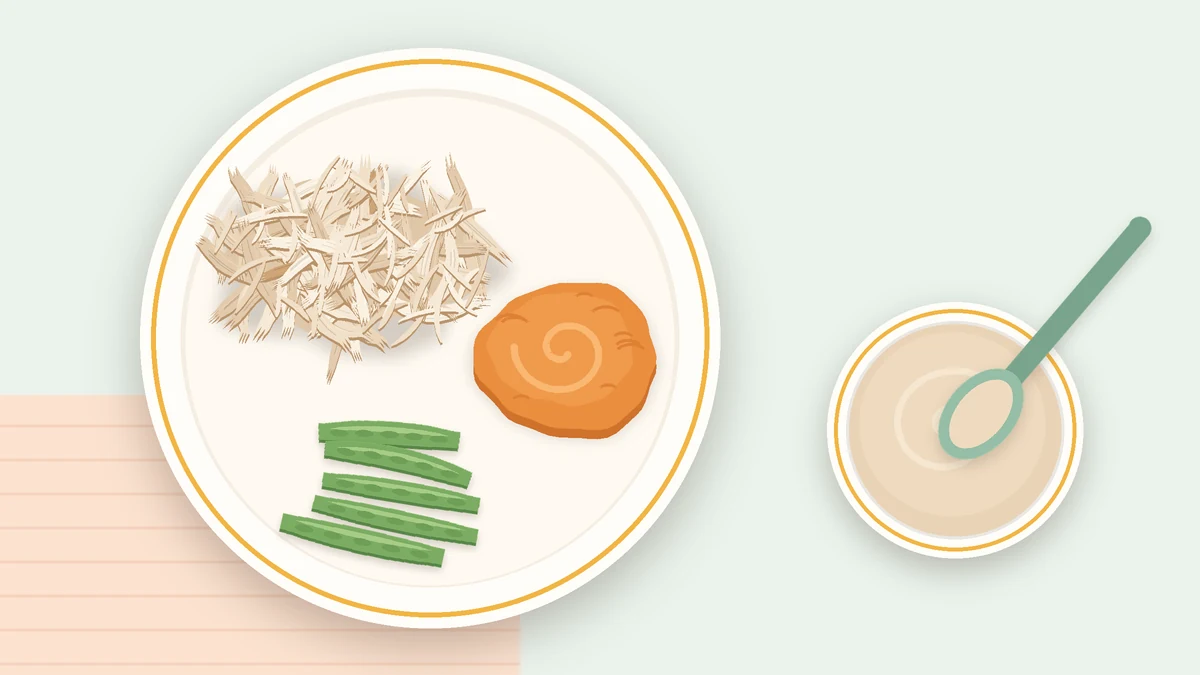
| Around 6 months | Smooth puree, or very finely minced turkey stirred into mashed sweet potato or other vegetables |
| 7 to 9 months | Minced or mashed with soft lumps, or finely shredded into mashed vegetables, plain yogurt or unsalted broth |
| 10 to 12 months | Small soft pieces or thin shreds to pick up. Soft meatballs cut into strips or quarters |
| Toddlers, 12 months and up | The family turkey, cut small and kept moist. Still no skin, bones or tough chunks |
Turkey for a 6 month old
Start with a smooth puree, or stir very finely minced turkey into mashed vegetables. For baby led weaning, offer a soft, moist strip of thigh meat about the size of your own finger. That is the size the NHS suggests for finger foods, and it says to start with foods that break up easily in the mouth (NHS). A dry or tough piece does not pass that test.
Kitchen tip: thigh meat is usually softer and moister than breast, which dries out fast. Add liquid to any turkey that seems dry.
Turkey puree for baby
Age: about 6 months+
Prep: 5 min
Cook: 15 min
Makes: about 1 cup (240 ml), 8 portions of 2 tablespoons
Allergens: none of the top 9, if you thin it with water
Turkey puree ingredients
- 8 oz (225 g) skinless, boneless turkey breast or thigh, or ground turkey
- 1 1/2 cups (360 ml) water
- Extra water, or your baby’s usual breast milk or formula, to thin
How to make turkey puree for baby
- Trim off any skin, fat and bone, and cut the turkey into 1 inch (2.5 cm) pieces (CDC). Do not wash raw turkey, because washing can spread germs to other food (CDC).
- Put the turkey and water in a small pan with no salt and no stock cube. Cover and simmer gently for 10 to 15 minutes. Break up ground turkey with a spoon as it cooks.
- Check the thickest piece with a food thermometer. It is done at 165°F (74°C) (FDA). The UK check is no pink meat, clear juices and steaming hot all the way through (Food Standards Agency).
- Blend the turkey with 1/3 cup (80 ml) of the cooking water until smooth. Add more liquid a spoonful at a time until the puree drops easily off a spoon.
- Cool until lukewarm and test it before serving. Chill or freeze the rest straight away.
Starting from a plain roast? Use 1 cup (140 g) of chopped inner meat with no skin, salty crust or gravy. Blend it with 1/3 to 1/2 cup (80 to 120 ml) of water or unsalted homemade stock.
Easy combinations
Blend the puree with an equal amount of soft cooked sweet potato, carrot, peas, apple or pear. For a ground turkey and sweet potato puree, simmer 4 oz (115 g) ground turkey with 1 cup (130 g) diced sweet potato until the potato is soft and the turkey reaches 165°F (74°C), then blend.
How to store turkey puree
Homemade baby food made with cooked meat or poultry keeps for 1 day in the fridge and is best within 1 month in the freezer. Freeze it in single portions. Reheat it to 165°F (74°C), then cool, stir and test the temperature before feeding (University of Illinois Extension). Throw away anything left in your baby’s bowl (NHS).
Ground turkey for baby: soft meatballs and mince
Ground turkey (turkey mince in the UK) is the quickest way to a soft texture. Cook it to 165°F (74°C), like all poultry (FDA). Leave out salt and stock cubes, and break it up finely as it cooks. Grated zucchini or mashed sweet potato keeps it moist.
Turkey meatballs for baby: mix 8 oz (225 g) ground turkey with 1/2 cup (60 g) grated zucchini, shape it into about 12 small balls and bake at 400°F (200°C) for 15 to 18 minutes, until the center reads 165°F (74°C). For babies under 12 months, cut each one into strips or quarters. Egg and breadcrumbs add egg and wheat, so use them only once your baby has had both. The NHS says to introduce foods that contain allergens one at a time (NHS).
Sharing the holiday turkey: which parts are OK for baby
At Thanksgiving or Christmas, your baby can share the roast if you pick the right parts.
- OK: plain meat from inside the breast or thigh, shredded fine and moistened with water or unsalted stock.
- Skip the skin, gravy and stuffing. The NHS says not to use gravy or stock cubes for babies because they are often high in salt (NHS). Most stuffing is salted too.
- Skip bones and gristle. Bones and tough chunks of meat are on the CDC choking list (CDC).
- Skip any honey glaze before 12 months (CDC; NHS).
Many holiday turkeys are brined or sold pre-basted, which salts the meat itself. We found no official guidance on brined turkey for babies. The simple fix is to cook a small plain piece separately for your baby.
For the rest of the plate, see our guide to Christmas dinner for baby.
How long does leftover turkey keep?
The US and UK rules differ, and homemade baby food has a shorter limit.
| Whose rule | Fridge | Freezer |
|---|---|---|
| Family turkey, United States (CDC, FDA chart) | Chill within 2 hours, at 40°F (4°C) or colder. Eat within 3 to 4 days | Plain cooked pieces keep their quality for 4 months |
| Family turkey, United Kingdom (Food Standards Agency) | Chill within 1 to 2 hours, at 0 to 5°C. Eat within 48 hours | Defrost in the fridge and use within 24 hours |
| Baby puree or mash (University of Illinois Extension) | 1 day | Best within 1 month |
Freezer times are about quality. Food kept frozen at 0°F (-18°C) stays safe (FDA chart).
Our suggestion for babies: do not wait until day 3 or 4. Portion plain turkey and freeze it on day 1 or 2.
Leftover turkey recipes for toddlers and babies
Start with plain turkey, with no skin or gravy. Reheat it to 165°F (74°C), steaming hot all the way through, then let it cool. Reheat it once only (CDC; Food Standards Agency).
- Turkey and sweet potato mash (about 6 months+). Blend or mash finely chopped turkey with cooked sweet potato and a little water.
- Turkey and vegetable soup (about 6 months+, blended or mashed). Simmer diced carrot, potato and tiny pasta in unsalted stock until soft, then add shredded turkey for the last 5 minutes. Our chicken yakhni for baby shows how to make broth with no salt.
- Turkey khichdi (about 6 months+, mashed). Stir finely shredded turkey into soft moong dal khichdi near the end of cooking. In the UK, leftover rice should be chilled within one hour, kept no more than one day and reheated once only (Food Standards Agency).
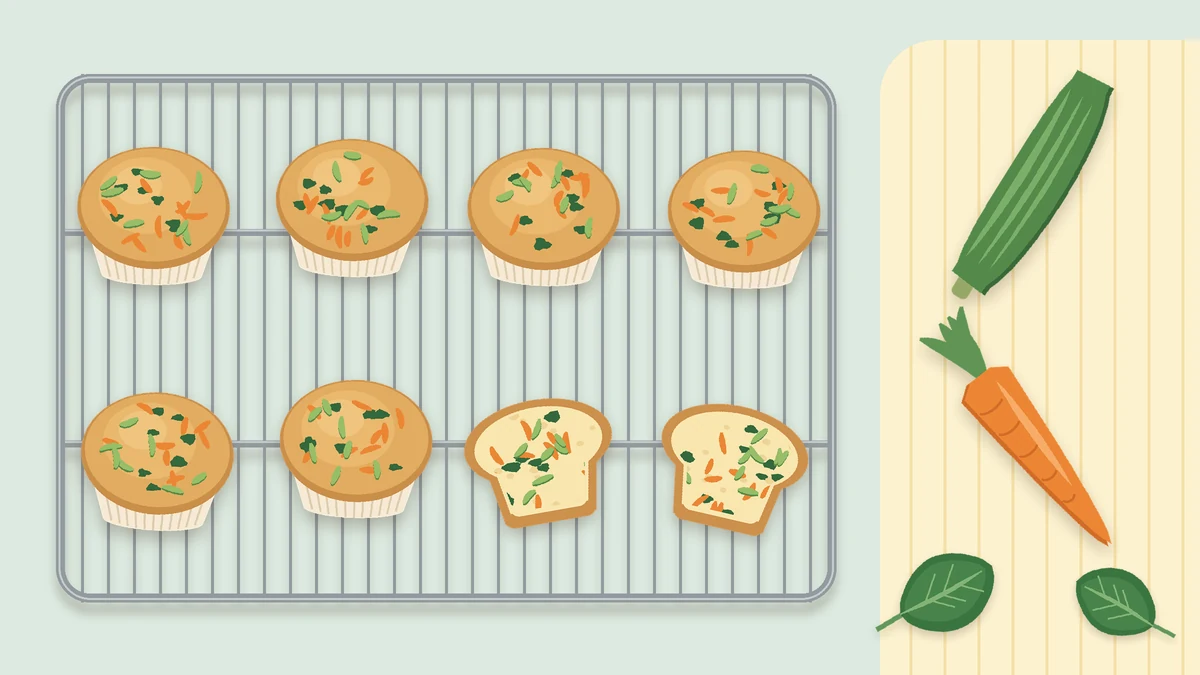
- Turkey and vegetable fritters (finger food). Mix 1/2 cup (70 g) finely chopped turkey, 1/2 cup (60 g) grated zucchini, 1 egg and 2 tablespoons flour. Cook small patties in a little oil until set all the way through, then cut into strips. Contains egg and wheat.
- Turkey and avocado toast fingers (finger food). Mash finely chopped turkey into ripe avocado and spread it thinly on soft toast fingers. Contains wheat.
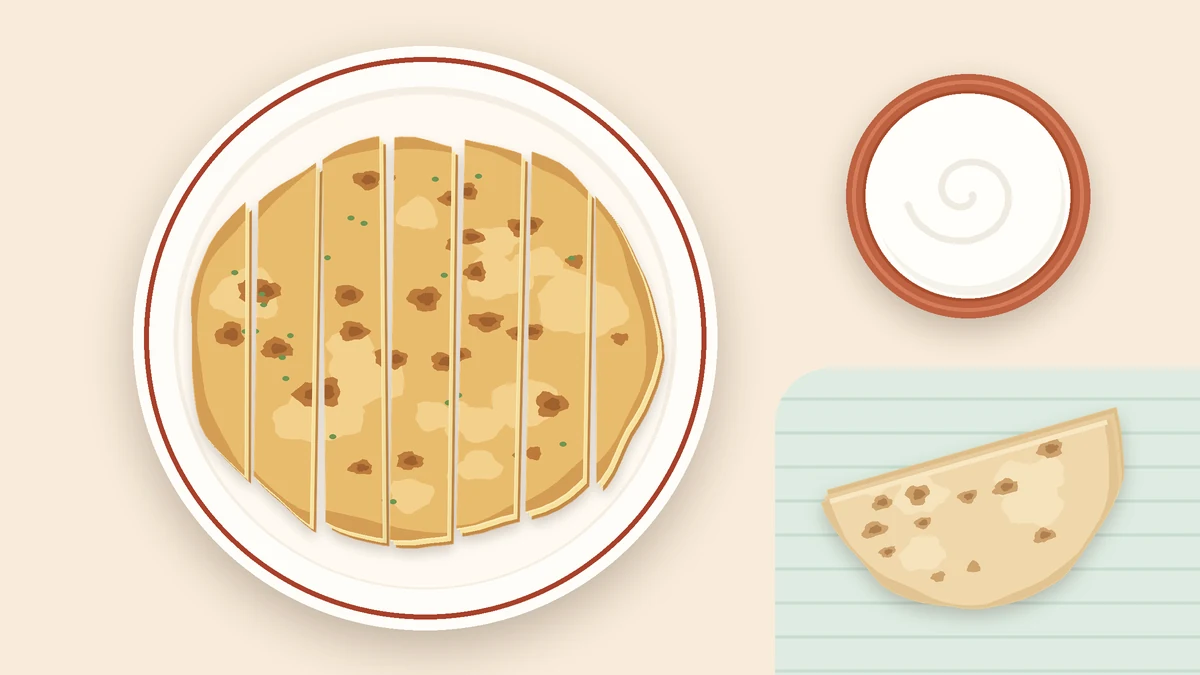
- Turkey and cheese quesadilla fingers (12 months+). Warm shredded turkey and a little grated mild cheese in a folded soft tortilla, then cut into fingers. Tortillas and cheese both contain salt, so we keep this one for toddlers. Contains milk and wheat.
For more, see our easy homemade baby food recipes and meal ideas for 2 year olds.
Can babies eat turkey bacon, sausage, deli meat or ham?
Not as baby food. The CDC says to avoid foods high in salt for young children and names processed meats such as lunch meats, sausages, hot dogs and ham (CDC). The NHS lists bacon and sausages among salty foods for babies to avoid (NHS). Turkey bacon, turkey sausage, turkey ham and deli slices are processed meats too.
For toddlers, keep them for now and then. Sausages, hot dogs and meat sticks are also on the CDC choking list (CDC), so cut any sausage into short thin strips, not rounds (CDC).
Turkey for baby: FAQs
Can babies eat turkey breast?
Yes, if it is plain and fully cooked. Breast meat dries out quickly, so puree it with extra liquid or shred it finely into something moist.
Can babies eat turkey mince?
Yes. Turkey mince (ground turkey in the US) is fine once your baby has started solids, as long as it is cooked through with no salt and broken up finely. Buy plain mince, not seasoned sausage meat or burgers.
Can babies have turkey gravy or stuffing?
Not the family versions. Gravy is often high in salt (NHS). Our Christmas dinner for baby guide has swaps with no salt.
This article is for general information only and isn’t medical advice. Every child is different. Talk to your pediatrician (or GP or health visitor in the UK) about your child’s needs, especially if your child has a food allergy, eczema, a medical condition, or trouble with feeding or growth. If your child is choking or has signs of a severe allergic reaction (swelling of the lips or face, trouble breathing, becoming floppy or pale), call 911 in the US, 999 in the UK, or your local emergency number.
Sources
- Centers for Disease Control and Prevention (CDC). When, What, and How to Introduce Solid Foods. Page dated 14 Apr 2026.
- CDC. Choking Hazards. Page dated 11 Mar 2026.
- CDC. Foods and Drinks to Avoid or Limit. Page dated 14 Apr 2026.
- CDC. Preparing Your Holiday Turkey Safely. Page dated 29 Apr 2024.
- American Academy of Pediatrics, HealthyChildren.org. When Can Babies Start Solid Foods? Last updated 23 Jun 2026.
- NHS. Your baby’s first solid foods. Reviewed 19 Feb 2026.
- NHS. Foods to avoid giving babies and young children. Reviewed 18 Feb 2026.
- NHS Best Start in Life. Storing and reheating food. Accessed 12 Nov 2026.
- U.S. Food and Drug Administration (FDA). Safe Food Handling. Content current as of 5 Mar 2024.
- FDA. Refrigerator and Freezer Storage Chart (PDF). March 2018.
- Food Standards Agency (UK). How to chill, freeze and defrost food safely. Published 18 Dec 2017.
- Food Standards Agency (UK). Cooking your food. Published 18 Dec 2017.
- Food Standards Agency (UK). Home food fact checker. Updated 21 Aug 2026.
- University of Illinois Extension. Feeding My Baby: Storing and Reheating. Accessed 12 Nov 2026.